


.jpg)
 Search
.jpg "ebook")
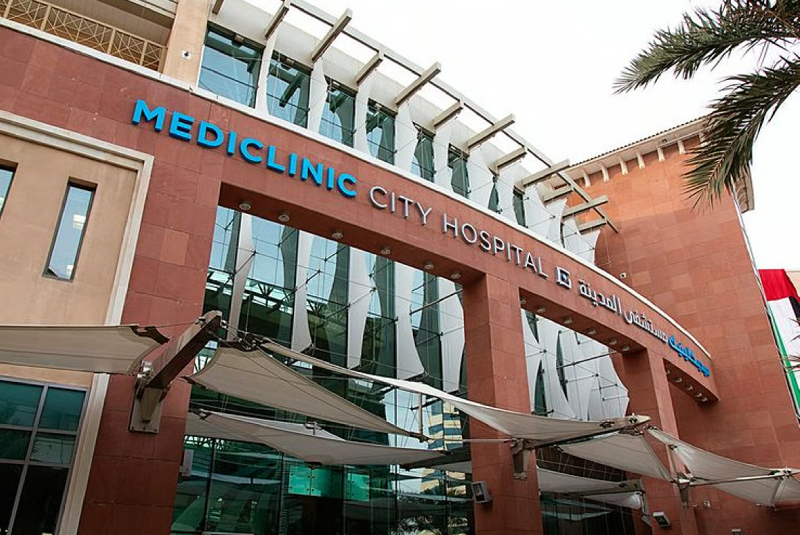
Infection prevention and control (IPC) have never been more crucial and Mediclinic City Hospital stands as a beacon of excellence in healthcare hygiene. The facility has built a reputation not just for its comprehensive clinical services but also for its unwavering commitment to health, safety, and patient outcomes.
Despite managing highly complex cases, the hospital has consistently recorded low infection rates—including zero cases of CLABSI and VAP in 2024—well below international benchmarks. This success is not coincidental but the result of a well-structured, multi-tiered infection control strategy involving stringent surveillance, evidence-based protocols, advanced technologies, and a strong culture of training and accountability.
Accredited by the JCI, PSFHI, and other global institutions, Mediclinic City Hospital integrates IPC into every facet of care delivery, from routine cleaning and disinfection to advanced hand hygiene programs and sustainable medical waste practices. In this interview, the infection control leadership team shares the pillars behind their success, including best practices in training, innovative use of UV disinfection, and how they are redefining healthcare hygiene standards across the Middle East.
- Tell us about your achievements in hygiene and IPC
Over the past four years, despite offering highly complex services for patients with critical conditions, our infection rates (CLABSI, CAUTI, VAP, and SSIs) have remained low, consistently outperforming global benchmarks in the last 4 years. This success can be attributed to our rigorous infection control practices. In addition, we conduct frequent internal audits and surveillance across all hospital areas, actively identifying potential infection control issues and promptly implementing corrective actions.
We are proud to have received accreditation from esteemed organizations such as the Joint Commission International (JCI), the Patient Safety Friendly Hospital Initiative (PSFHI) – making us the first private hospital in the UAE to achieve this, as well as JCI Clinical Care Program Certification (CCPC) for Breast Surgery and Acute Coronary Syndrome, and American Heart Association Stroke Accreditation. We have performed well in our two JCI accreditation surveys for hospitals over the past six years, and we have achieved a near perfect record.
Infection control has been a cornerstone in achieving all of these accolades. Our hospital employs three key multidisciplinary groups focused on infection control: the Infection Control Committee, the Antibiotic Stewardship Committee, and the Infection Control Task Force (ICTF). ICTF includes infection control experts not just from City Hospital but also from all Mediclinic facilities in the Middle East. We also introduced weekly huddles in the operating theater, where infection control is a standing agenda item. This initiative ensures we maintain the highest standards in infection control within the operating theater.
Mediclinic City Hospital, the largest independent private hospital in the UAE, boasts 277 beds and a comprehensive range of multispecialty services under one roof. These services include cardiology, radiology, gynecology, trauma, nuclear medicine, endocrinology, obstetrics, neonatal care, and more. We are one of the few centers in the region offering specialized treatments such as radiation therapy, nuclear medicine, thrombectomy, and complex cardiovascular care.
- How does your infection control programme stand out?
Every year, we develop our infection control program. This is based on an Infection Control Risk Assessment (ICRA) which is done prior to developing the plan. ICRA is a multidisciplinary effort which includes reviewing of the trends related to HAIs, policies & procedures implementation, hand hygiene practices, MDROs, infectious diseases outbreak etc. Based on this, priorities are identified and these become goals and objectives for the next year. For these priority areas we also identify the targets that we want to achieve for the next year and an action plan with strategies is identified.
Our infection control program is supported by a well-established Infection Control Committee, which includes representatives from various disciplines such as infectious disease physicians, infection control nurses, microbiologists, nurses, physicians, surgeons, pharmacists, quality, and engineering. The committee meets monthly to review trends, address ongoing issues, and make decisions related to policies and strategies.
Additionally, the Infection Control Team (ICT), consisting of the infectious disease physician, infection control nurse, microbiologist, and quality specialist, meets weekly to discuss all admissions involving infectious diseases and potential healthcare-associated infections. The team reviews positive culture reports from the microbiology lab to stay on top of any emerging concerns. This proactive approach ensures a comprehensive and timely response to infection control issues.
- What are some of the cleaning and hygiene products and technologies you have used
At Mediclinic City Hospital, like all healthcare organizations, we use a variety of chemicals for disinfecting, sterilizing, and sanitizing. Chemicals such as Triosan and Q San are used for cleaning and disinfection, and these are chosen through a thorough review process, which includes pilot testing by end users and gathering their feedback. We also prioritize selecting environmentally friendly chemicals.
One key focus is the contact time of these chemicals—ideally, the shorter the contact time, the better, as it allows staff to proceed with cleaning without unnecessary delays. Additionally, we use automatic dispensers to ensure the chemicals are properly diluted, promoting effective disinfection and sterilization. Most importantly, the handling of these chemicals is very safe for our staff.
In addition to chemical disinfectants, we utilize UV light for terminal cleaning. To enhance hand hygiene practices, we have motion-activated hand sanitizer dispensers, ensuring that staff receive the correct amount of sanitizer while minimizing the risk of cross-contamination. To further promote hand hygiene awareness, we use UV light to check for any germs on staff hands, helping to reinforce the importance of proper hand hygiene and hand rub usage.
- Tell us about your hand hygiene programme
Hand hygiene is a cornerstone of our infection control program, as the CDC highlights it as the single most effective way to prevent infections. We prioritize extensive training on hand hygiene for both clinical and non-clinical staff. Additionally, we actively monitor hand hygiene compliance through observations using the WHO 5 Moments of Hand Hygiene audit tool. To ensure unbiased results, staff from all departments—such as nurses, physicians, housekeeping, technicians, and quality—are selected for observation, with a rotating schedule each month to maintain accurate assessments.
Every year we celebrate hand hygiene week and involve both staff, patients and visitors. We conduct quizzes, unit rounds giving away gifts to staff and patients for compliance, demonstrate the correct method to perform hand hygiene, we get good participation from physicians, nurses and other staff in these events and, all this further helps in our compliance.
- Tell us the USPs of your medical waste management programme.
We have a comprehensive policy for medical waste management, with a primary focus on the proper segregation of waste at the point of generation. This approach helps minimize the overall volume of medical waste and reduces the risk to those handling it. We closely monitor the amount of medical waste generated in relation to hospital activities, such as admissions, surgeries, and outpatient visits. Any significant variations are reviewed to identify areas with excessive waste generation, allowing us to determine the causes and implement corrective actions.
To date, we have successfully maintained medical waste generation at a minimum level per bed. Our waste segregation process is regularly monitored through daily surveillance activities, Environment of care (EOC) rounds, and quality audits. If any discrepancies are identified, staff receive in-service education to correct practices. Additionally, we ask our medical waste collectors to report any incidents of improper waste segregation.
We also pay close attention to the proper segregation of sharps, ensuring they are correctly identified in medical waste bags or linen. As a result, we have significantly reduced sharp injuries caused by improper segregation, bringing them to almost negligible levels. The number of incidents reported related to improper segregation are down to minimum and we cross check by doing focused inspections / audits by the quality team, the findings of these inspections are in line with the incident reported thus validating lower rates or negligible issues related to improper waste segregation. This is contributed by regular training and effective surveillance.
- How important is training in hygiene management?
We require all staff to complete mandatory training on infection control topics, including hand hygiene, infectious diseases, personal protective equipment, standard precautions, and more. These trainings are assigned at the beginning of each year, and staff are required to complete them through our Learning Management System (LMS), with successful completion verified through evaluations. The completion of these trainings is incorporated into the annual performance evaluation, ensuring that all staff are up-to-date on infection control practices.
In addition to the online training, the infection control team and committee conduct regular classroom sessions to cover new infection control practices, address challenging areas, and communicate policy changes. We also celebrate Infection Prevention and Control (IPC) Week annually, during which staff are encouraged to set up booths to educate colleagues, patients, and visitors using innovative methods. Throughout this week, we host competitions such as quizzes, poster presentations, and video presentations. Units are also recognized with awards for best performance and cleanliness.
- What is the hospital’s HAI rate and how it has reduced with the current programme in the past year
Owing to the patient population that we treat at City Hospital, these patients are usually at high risk for Healthcare associated infection and hence we closely monitor these infections. These include CLABSI, CAUTI, VAP and SSI. To prevent these infections, apart from intense training for staff, we also implement care bundles. These care bundles help staff take appropriate preventive measures to prevent infections to patients. We also monitor compliance to the implementation of care bundles through document review and observations.
Central Line Blood Stream Infections (CLABSI) - We have had only 0 CLABSI infections in the whole year of 2024 with an overall rate of “0” per 1000 device days which is much better than the CDC benchmark of 2.
Cather Associated Urinary Tract Infections (CAUTI) – Similarly, we had only 1 CAUTI infections in the year of 2023 with an overall rate of “0.21” per 1000 device days which is much better than the CDC benchmark of 2.
Ventilator Associated Pneumonia (VAP) – when it comes to VAP, we are proud to state that we have had “0” infections despite having 2033 ventilator days in the year 2024.
Surgical Site infections (SSI): Our SSIs rate in the year 2024 is “0.4” per 100 surgeries. City Hospital had performed 5370 surgeries in the year 2024 and the overall rate of SSI is better than the international benchmark of 1.4%.
